[ Blog · For Brands · 7 min read ]
By Sefa Yamak
Food photography for restaurants: how a professional shoot actually works
How professional food photography really works: light, styling, and team workflow from an Istanbul studio shooting for fine-dining restaurants and brands.
Good food photography is mostly about light and time, in that order. If you get the light right — soft, directional, believable — the plate does half the work. If you get the timing right, the food still looks alive when the shutter fires. Everything else, from styling to retouching, sits on top of those two things.
At PAM Istanbul we shoot food for restaurants and brands as a team: photographer, producer, food stylist when the job calls for one, and a separate crew when video is involved. This piece is a walk through how we actually run a food shoot — what happens before anyone touches a camera, why almost everything we light looks like daylight, and how the same plate gets shot differently for a menu, an Instagram grid, and a campaign.
Light is the whole game
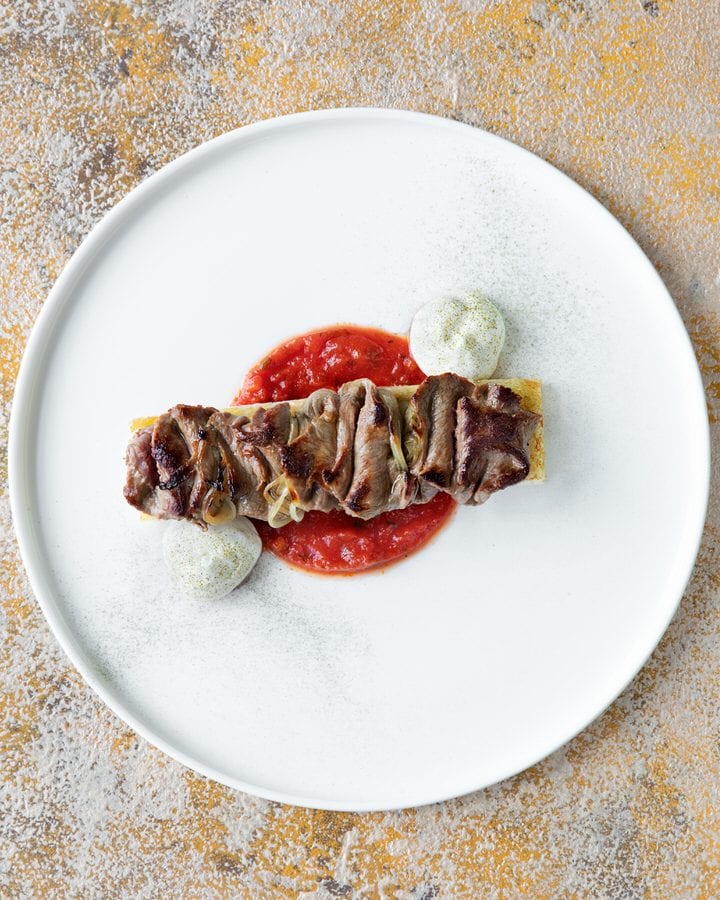
Every memorable food photograph you can think of has one thing in common: the light comes from somewhere specific and falls off somewhere else. Flat, even light kills food. It flattens the sear on a piece of meat, erases the gloss on a sauce, makes bread look like a prop. What you want is a single dominant source — usually from behind or from the side — so that steam, texture and moisture catch the light and the shadows give the plate shape.
In practice we often work with one large softbox and a lot of subtraction: black cards to deepen shadows, small white bounces to open up the front of the plate just enough. Beginners tend to add lights when a photo looks wrong. Nine times out of ten, the fix is taking light away, not adding it.
Why the daylight look wins
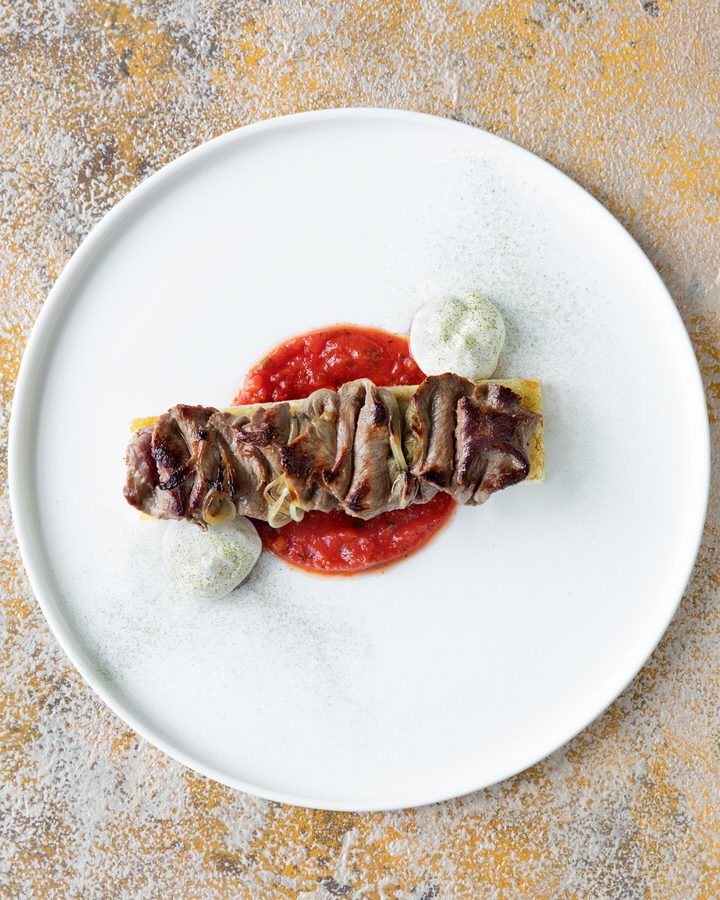
Almost every brief we receive, whether it says so or not, is asking for the same thing: food that looks like it was photographed by a window on a bright, slightly overcast day. There is a reason for that. We eat by daylight. Our brains calibrate what "fresh" and "appetizing" mean under it. Heavy, obviously artificial lighting reads as advertising from another decade.
So even when we shoot with strobes — and for consistency across a forty-dish menu shoot, we usually do — the goal is to make the light behave like a window. Big source, one direction, natural falloff. When a restaurant actually has beautiful window light, as some of the fine-dining rooms we've shot in Istanbul do, we'll happily build the whole setup around it. Real daylight shifts by the minute, which is a scheduling headache, but nothing we build in the studio ever beats it completely. That's an admission, not a complaint.
Styling and the first twenty minutes
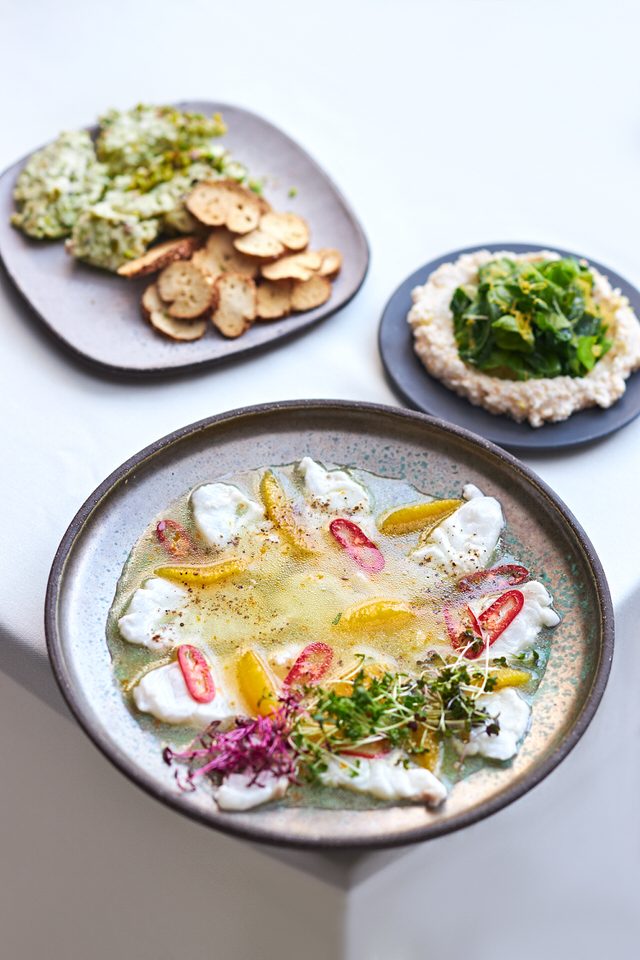
Here is the part nobody tells restaurant owners: most dishes have a photogenic lifespan of a few minutes. Herbs wilt, sauces skin over, anything fried loses its edge, ice cream simply gives up. So the real skill of a food shoot is choreography. We build and light the set with a stand-in plate — a rough version of the dish that nobody will photograph seriously. Camera angle, composition, exposure, props: all locked before the real plate exists.
Then the kitchen fires the hero dish, and the first twenty minutes — often the first two — are everything. The chef plates it, the stylist makes micro-adjustments with tweezers and a brush of oil, and we shoot fast, in bursts, checking the tether between passes. Working with chefs at places like Lokanta 1741 taught us to respect their plating instead of overriding it; our job is to translate what they already do beautifully, not to redecorate it. When a shoot feels calm, it's because the preparation was obsessive.
Menu, Instagram, campaign: three different photographs
A common mistake is treating a food shoot as one deliverable. The same dish serves at least three masters, and they want different things.
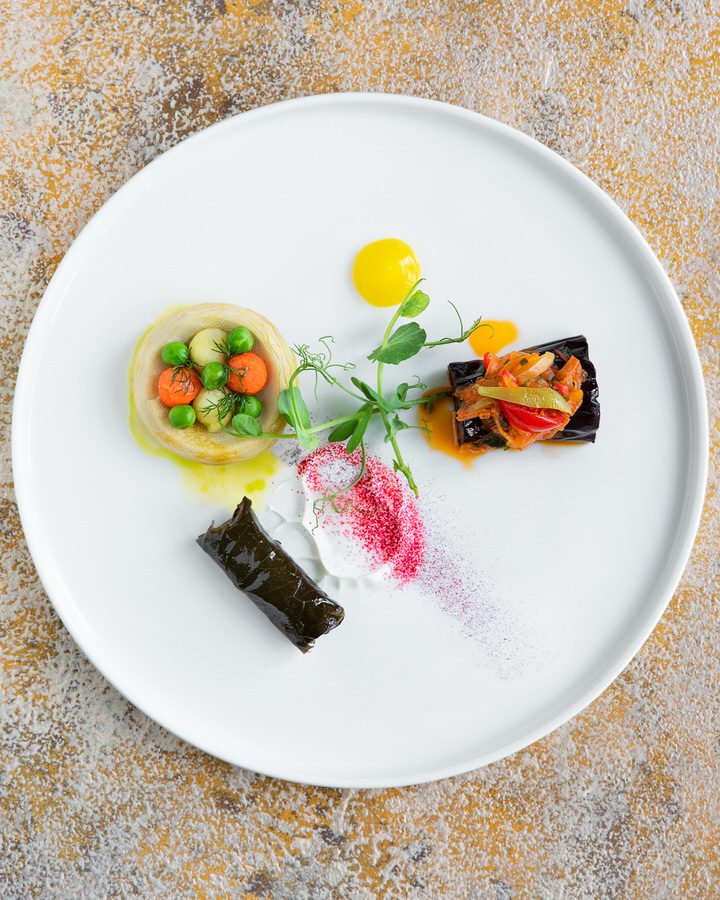
Menu and website photography needs consistency above all: same angle logic, same light, same color across every dish, so the menu reads as one document. Instagram wants looser, more atmospheric frames — hands, tables, imperfection, vertical crops with breathing room for text. Campaign work is the opposite of both: one dish, one hero image, built and lit like a still life, where we might spend on a single frame the time a menu shoot gives an entire course. We plan the shot list around these buckets before the shoot day, because switching between them mid-flow costs more time than shooting them in blocks.
What working with a studio team actually looks like
Food photography looks like a solo craft from the outside. On a real production it isn't. On our shoots the producer handles the schedule, the shot list and the conversation with the kitchen, so the photographer can stay behind the camera. A stylist owns the plate and the propping. If the project includes video — and for restaurants it increasingly does — a separate crew handles motion, because stills and video have opposing needs on set and one person juggling both delivers half of each.
For a restaurant, this structure means the shoot day interrupts service as little as possible. We arrive with a plan agreed in pre-production: which dishes, in which order, matched to what the kitchen can realistically fire back to back. The best food shoots we've done felt boring on the day. That's the goal.
What we'd tell a restaurant before their first shoot
Three things. First, trust the pre-production call more than the shoot day; the dish list and firing order decide the outcome. Second, have the kitchen treat photo plates like service plates — cooked properly, plated by the chef, not assembled cold for the camera. Real food photographs better than faked food, almost always. Third, think in the three buckets above before the shoot, not after, so nothing gets photographed for the wrong medium.
FAQ
How long does a professional food shoot take?
It depends on the dish count and how many of them are hero images. As a rough shape: a consistent menu shoot moves at several dishes per hour once the setup is locked, while a single campaign hero can take half a day on its own. The pre-production plan, not the camera, sets the pace.
Do you use fake food or tricks?
Almost never. Modern food photography leans on real food shot fast, with a stylist keeping it alive. A few classic aids exist — oil for gloss, careful steam — but the era of motor-oil syrup is long gone. Real food, well lit, wins.
Should we shoot in our restaurant or in a studio?
Both work, for different jobs. Shooting in the restaurant gives you the room, the tables, the actual atmosphere — ideal for menu, website and social content. Studio gives total control, which campaign and packaging work usually demands. Many projects sensibly split into both.
Can photo and video happen on the same day?
Yes, and for restaurants it's often the efficient choice — the kitchen fires each dish once for both. But it works because stills and motion are handled by separate people on our side. When one person tries to do both, both suffer.
Related serviceShooting and production in Istanbul with PAM Istanbul — see the work or send a brief.