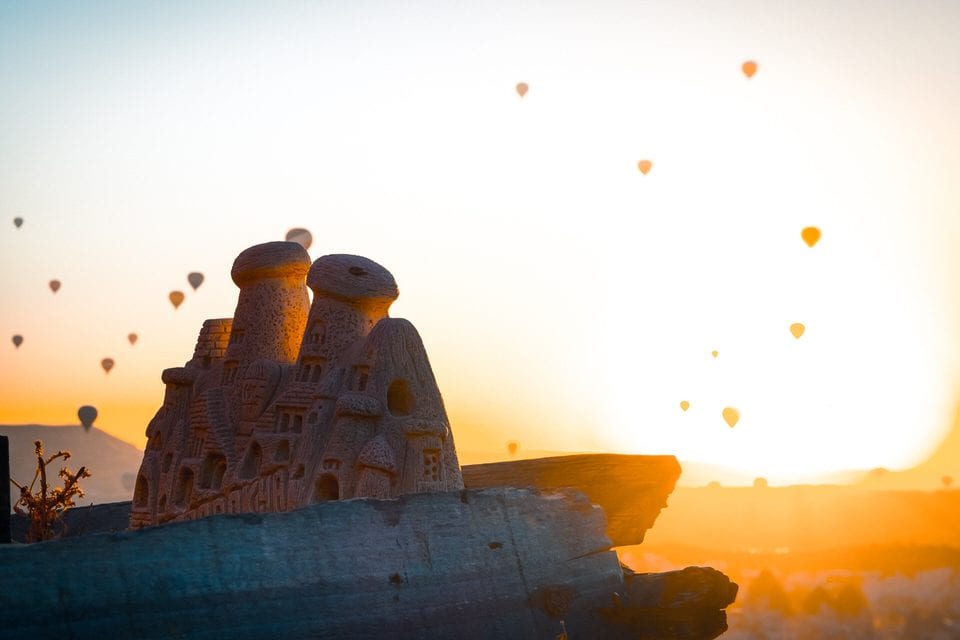
[ Blog · Photography & Fine Art · 7 min read ]
By Sefa Yamak
Cappadocia Photography Guide: Balloons, Light and the Right Hours
A working photographer's guide to Cappadocia: where to stand at sunrise, the best viewpoints in Göreme and Uçhisar, and why dusk beats the balloon cliché.
Let me answer the question you came here with, straight away: the best time to photograph Cappadocia is sunrise, roughly forty minutes before the sun clears the horizon until an hour after. That is when the balloons fly, when the tuff glows amber, and when the valleys still hold their blue shadow. The best season is late September through early November, with April and May a close second. Winter gives you snow on the fairy chimneys and empty viewpoints, if you can bear the cold and the higher chance of cancelled flights.
I have been photographing for twenty-five years, and I keep coming back to Cappadocia the way I keep coming back to Varanasi: not because I need another balloon picture, but because the place keeps offering pictures nobody asked it for. This guide is what I would tell a friend over tea the night before their first sunrise there.
Balloons at sunrise: where to stand
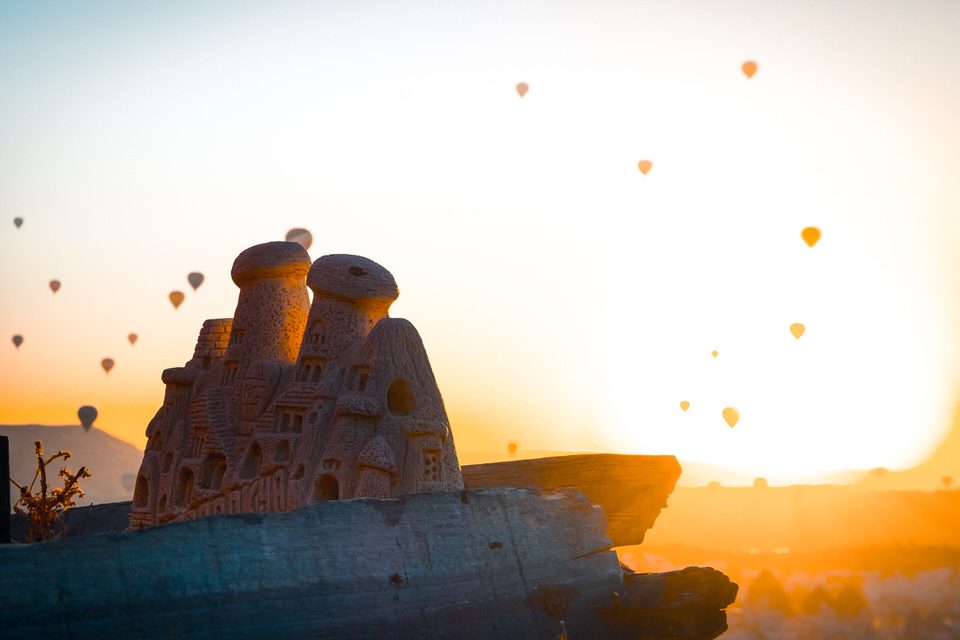
Here is the honest part. The balloon frame is a cliché. It is also, when the light cooperates, one of the great spectacles you can point a camera at, and pretending otherwise is snobbery. The trick is that the shot you want is almost never taken from inside a balloon. From the basket you get other balloons at eye level and a landscape flattened by altitude. The photographs that work are made from the ground, with the balloons as elements in a composition, not as the whole subject.
My standard positions: the ridges above Göreme on the Aydın Kırağı side, where the balloons drift over Love Valley's spires; the edge of Red Valley, where low sun turns the rock the colour of embers; and the rooftop terraces of Göreme itself, useful on lazy mornings but crowded. Arrive in the dark. Balloons inflate around first light and the whole flight is over within ninety minutes. Shoot into the sun for silhouettes and golden haze, then turn around — the front-lit rock behind you is often the better picture, and everyone else is facing the wrong way.
Wind decides everything. Some mornings the balloons drift straight over your head; some mornings they go the other way entirely; some mornings they do not fly at all. Give yourself at least three sunrises. One will be the keeper.
Göreme and Uçhisar viewpoints
Göreme sits in a bowl, which means almost any high point around it works. Sunset Point, just above the town, is the obvious choice and earns its name. For something quieter, walk twenty minutes into the ridges between Göreme and Çavuşin — you will have carved dovecotes, lone chimneys, and no tripods jostling yours.
Uçhisar is the other anchor. The castle rock is the tallest thing on the plateau and appears on the horizon of half the photographs made in the region, mine included. Photograph it from Pigeon Valley in late afternoon, when the side light carves out every window and hollow. Or climb it and shoot outward — from the top, the whole eroded landscape lies below you like a relief map.
Dusk is the underrated hour
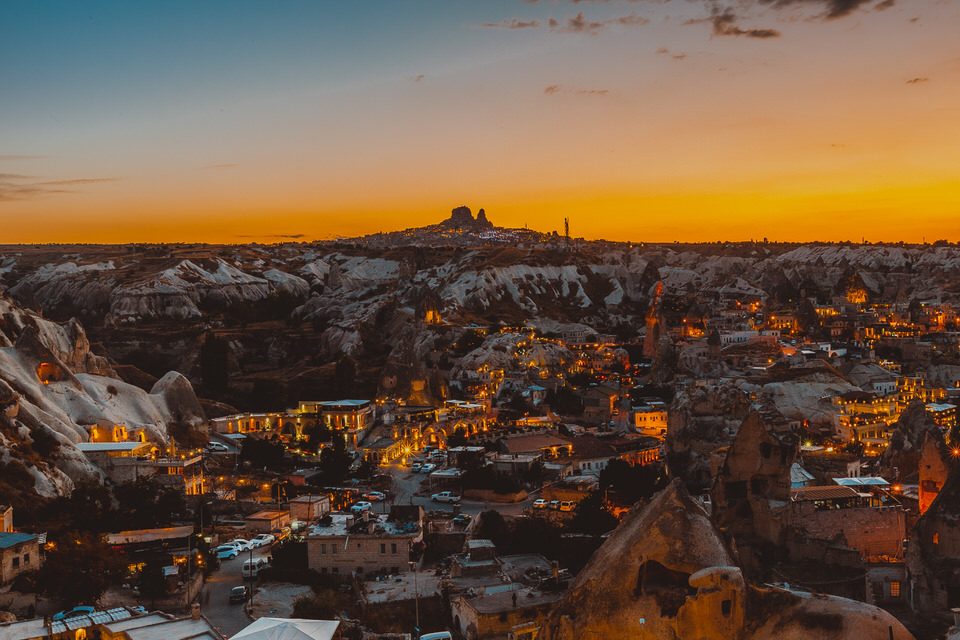
Everyone leaves after sunset. This is a mistake I encourage other photographers to keep making, because it leaves the best hour to me. Twenty to forty minutes after the sun goes down, the sky turns a deep cobalt, the village lights come on, and Göreme becomes a nativity scene carved in stone. The cave hotels glow from within; the minaret is lit; Uçhisar sits black against the last colour in the west.
This is tripod territory — exposures run one to eight seconds — but the reward is a photograph of Cappadocia that does not look like everyone else's. No balloons, no crowds, just stone and warm light and blue air. If I could keep only one frame from all my trips, it would be from this hour, not from sunrise.
Beyond the postcard
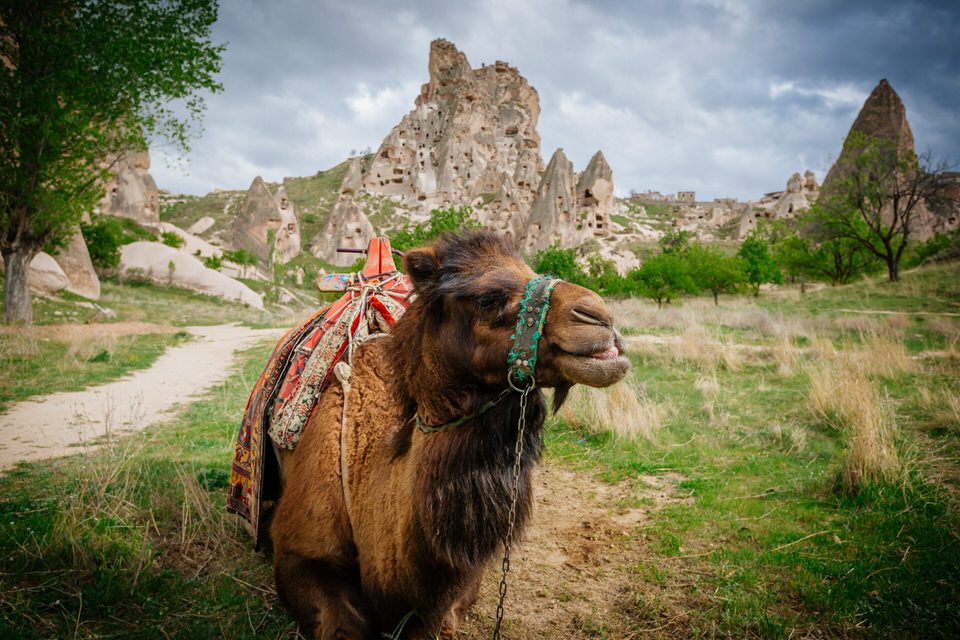
Cappadocia is not only geology. It is farmers leading horses through Rose Valley, grandmothers drying apricots on cave roofs, and yes, camels in ceremonial saddles waiting for tourists beneath the Uçhisar rock. I used to walk past the camels; they felt like a tourist prop. Then one stormy afternoon the sky went slate grey behind the castle, the camel stood patient and indifferent in its red tassels, and I understood the prop was also a portrait waiting to be made.
Work the details too: the texture of tuff up close, hand-cut steps worn to a shine, laundry strung between two chimneys. These frames give a body of work its breath. A portfolio of nothing but grand vistas exhausts the eye.
Practical notes
Season: October is my favourite — stable weather, soft light, vineyards turning. April and May are green and fresh. July and August mean harsh light by 8 a.m. and heavy crowds. Winter is stark and beautiful but flights cancel often.
Crowds: sunrise viewpoints fill up fast in high season. Arrive early or walk further than the parking lot — two hundred metres of effort removes ninety percent of the people.
Gear: keep it minimal. One body, a wide zoom around 16-35mm for the valleys, and a 70-200mm — the telephoto is the secret weapon here, compressing balloons against the chimneys. A light tripod for dusk. That is all. I have watched people miss the entire flight while changing lenses.
FAQ
What is the best month to photograph Cappadocia?
October, in my experience. The weather is stable so balloons fly most mornings, the light stays soft longer, and the summer crowds have thinned. April and May are the best alternative if you prefer green valleys.
Do I need to fly in a balloon to get the shot?
No — the iconic photographs are taken from the ground, with the balloons drifting over the valleys and chimneys. Fly for the experience if you like, but plan your photography around ridge viewpoints at sunrise.
Where should I stand at sunrise?
The ridges above Göreme facing Love Valley, the edge of Red Valley, or a rooftop terrace in Göreme. Arrive in the dark, shoot into the sun first, then turn around for the front-lit rock.
Is a phone camera enough?
For sunrise and the wide scenes, honestly, yes — modern phones handle that light well. Where a phone struggles is telephoto compression and long dusk exposures; if those frames matter to you, bring a camera and a small tripod.