[ Blog · Photography & Fine Art · 6 min read ]
By Sefa Yamak
Golden hour: the light that does half the work for you
Why the hour after sunrise and before sunset flatters almost everything, and how to actually use it instead of just standing in it.
Golden hour is not a marketing word, even though it has become one. It is a real, physical thing: the roughly sixty minutes after the sun comes up and the sixty before it goes down, when the sun sits low and its light has to travel through much more of the atmosphere to reach you. That long path does two things. It warms the colour, and it softens the shadows. Both are kind to a face.
Midday light comes straight down. It drops shadows into the eye sockets, under the nose, under the chin, and it does this to everyone regardless of how they look. Low light comes from the side. It rakes across a face instead of falling on top of it, and that is the difference between a snapshot and a portrait.
Here is how I actually use it, beyond standing in it and hoping.
Put the sun to the side, not behind your subject's head and not in their eyes. Forty-five degrees off to one side gives you a lit cheek and a shadowed one, and the line between them is where the face comes alive. For something softer, turn the person until the sun is just behind their shoulder and let the light wrap around.
Expose for the face, not the sky. The sky at golden hour is bright and your camera will try to protect it, leaving the person too dark. Decide that the face is the subject and let the sky blow a little. A face correctly lit with a slightly too-bright sky behind it looks like golden hour. The reverse looks like a silhouette you did not mean to make.
Work fast, and get there early. The good light at the start of the day lasts about twenty real minutes, not sixty, and it changes every time you look up. I get into position before it arrives and I am ready when it does. By the time most people lift the camera, the best of it has already moved on.
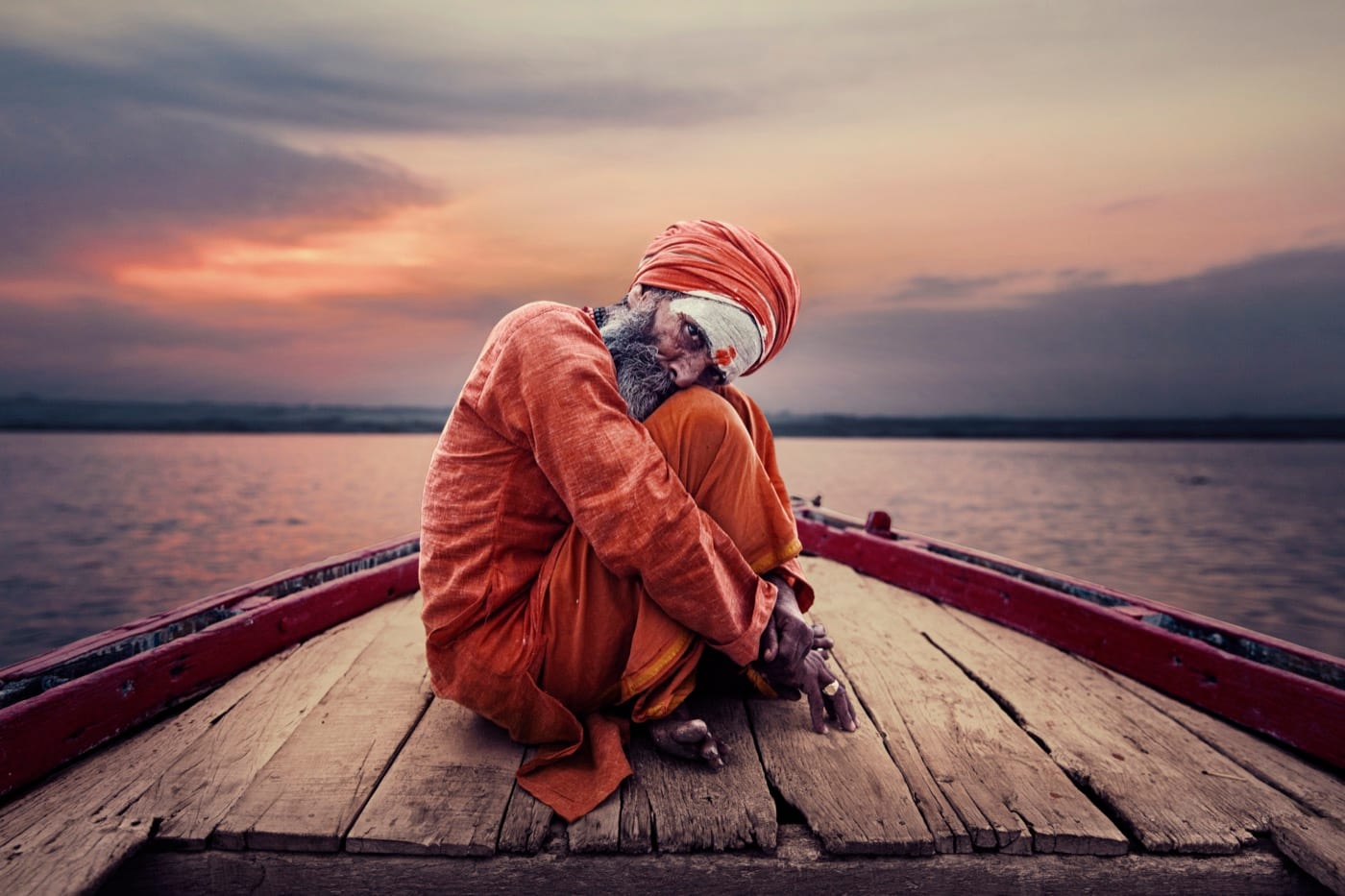
Stay for the blue hour. After the sun is gone there is a short, cool, even light that almost nobody waits for. It is quieter than golden hour and it suits a different kind of face. The first dawn portrait in my India work was made in exactly that window, before the sun, when the river was still silver.
Golden hour will not compose the picture for you and it will not tell you what the person is feeling. But it removes the single hardest problem in photography, which is bad light, and it hands you the one thing you cannot buy back once it is gone: a few minutes when everything looks the way you wish it always did.