How to shoot in low light without a flash
The light in a dim room is usually the reason the room is worth photographing. A pop-up flash destroys exactly that — it floods the scene, flattens the faces, and turns a warm evening into a police photograph. So the goal in low light is to gather the light that is already there, not to add your own.
You have four ways to gather more light, and you use them in this order.
Open the aperture all the way. This is what fast lenses are for. A cheap 50mm f/1.8, which costs less than almost any other lens, lets in eight times more light than a typical kit lens at its widest. If you photograph in low light often, one fast prime lens will change more than a new camera body ever could.
Slow the shutter, but only to the edge of safety. Handheld, you can usually hold steady down to about 1/60, sometimes 1/30 if you brace. Below that, your own pulse blurs the frame. Lean against a wall, put your elbows on a table, breathe out as you press. Every bit of steadiness buys you light.
Raise the ISO, and stop being scared of it. This is where beginners freeze, afraid of noise. Do not. A sharp, slightly grainy photo is a photo. A clean blurry one is nothing. Push the ISO until the shutter is fast enough to be safe, and let the grain fall where it does. You can soften it later if you must; you cannot rescue blur.
Find the one good source and use it. Dim rooms are rarely evenly dark. There is a window, a lamp, a doorway, a candle. Move your subject toward it and turn them so it rakes across the face. One honest source of light, used well, beats a flash every time.
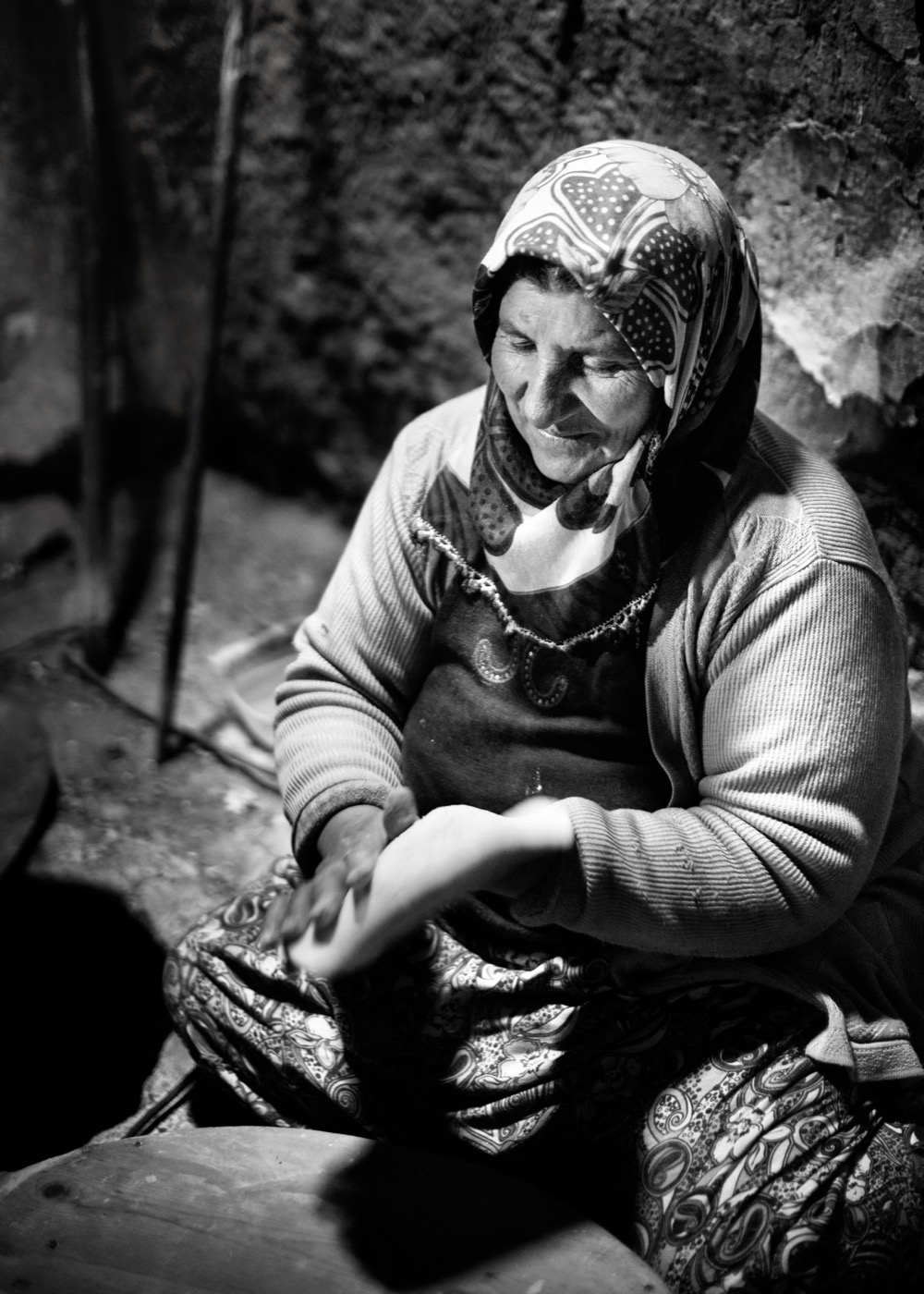
The portrait of the woman making bread in the Anatolia series was shot in a room lit by a single side window, no flash, ISO high enough that you can see the grain if you look. The grain does not weaken it. The light is the whole reason the picture exists, and a flash would have killed it in an instant.